Wednesday, June 30, 2010

Prompt the Muse #16 - Wednesday Speculative Writing Prompt

Art: Mirror with Candle
Consider the means whereby writers create a mood in a scene.  For this prompt you need to create a sinister mood in 200 words.  Steer clear of any obvious words such as: evil, malicious, horrifying, dangerous, dark, scary, etc.  Try to create the mood by describing the setting as creatively as possible.

Image Credit:  Skull Mirror from Wikimedia Commons

Wednesday, June 23, 2010

Prompt the Muse #15 - Wednesday Speculative Writing Prompt

Image:  Blue Fractal
Humans use many different tools to determine their position and direction, such as a compass and satellite systems. Your characters have been stranded on a planet where there is no advanced technology, and no metal. What means do they use to determine their position and direction? Feel free to consider what early humans might have done, or call on magic or supernatural means. Write your ideas in 200 words.

Image Credit:  Kompas from Wikimedia Commons

Wednesday, June 16, 2010

Prompt the Muse #14 - Wednesday Speculative Writing Prompt

Image:  Many Galaxies Colliding
Your characters take a journey from one galaxy to another. They do not use a mechanical or technological means (i.e. no star ships, warp gates, etc.) They do not use magic. How do they travel? What is the journey like? Write your idea in 200 words.

Image Credit:  NASA

Sunday, June 13, 2010

Giant Jupiter Provides a Constant Spectacle

Art: Gas Giant Mining Drone by Betelgeuze01
I see I have managed nothing but writing prompts for the past few weeks. Haven't been producing the word counts I like to see, and I have several short stories languishing here on my computer that should be out on the street. I've been concentrating on other issues, like the poetry contest at the SFPA I posted about. So I imagine this somewhat sorry state of writing affairs will continue until mid July, when that wraps up. But that's one of the reasons I started this blog, as a fun way to keep myself motivated to write. And the heavens have cooperated with a little planetary display that has gotten me off of my duff for a real post.

I am generally partial to planets with solid surfaces, and then am biased to rocky planets as opposed to icy ones. Still, Jupiter has diverted my attention, as well as the attention of many others. Recent events have underlined just how cool a gas giant planet can be. Atmospheres always emphasize the human fascination with things that constantly change, and yet stay the same. Seasons, for example. We love to watch the seasons change, but mostly because we know that winter will always give way to spring. Constant change, but within a known pattern.

Jupiter has a number of cyclical patterns that change its atmosphere - some of which are pretty dramatic, (as noted on Emily Lakdawala's great blog over at the Planetary Society, AstroBob, Bad Astronomy, and others) About a month ago, amateurs noted that the wide, nearly ever-present dark band around the southern equatorial region of the planet was ... gone. Yep, just gone. (Note pix - also note that the Great Red Spot is still there, just on the other side of the planet.) For those unfamiliar with the cyclical changes on Jupiter, this was a pretty big shock, and a striking change to the look of the planet. But such a dramatic change isn't unexpected; the southern equatorial band disappears every three to fifteen years, and then comes back again. The return is actually a pretty dramatic event, too, so it is worth keeping your eyes and ears open for Jupiter news.

Of course, when I see things like this, I imagine what the good, solid, scientific reasons might be, and then what the fun, bizarre, speculative reasons might be. For example, maybe the atmosphere of a gas giant could be altered by a planet-wide gas mining operation (as seen in the art, above). A gas giant like Jupiter might give the impression of possessing an infinite quantity of resources, but like the Earth, any planetary resource will eventually run out. Or be handled in such a way as to eventually destroy the environment that supported the resource. An interesting idea - contemplating how such mining might be approached. In Star Wars, Lando Calrissian was the administrator of the Cloud City Tibanna Gas Mines. We weren't given all the details about exactly how or why that operation was carried out, but it definitely sounded cool. (Although apparently "tibanna" is some kind of "rare form of matter naturally found in the state of a gas." Definitely not enough detail ...)

I was planning to end my post there, but then Jupiter experienced another interesting event. The image shows a bright flash in the southern hemisphere (image is south to the top). This was probably caused by an impact event, smaller but basically the same as the Shoemaker-Levy 9 impact events of about fifteen years ago. Jupiter possesses the high gravity demanded by its high mass. Such a gravitational well and big target means impacts into Jupiter's atmosphere are constant. They are into the Earth's atmosphere as well, but bigger stuff hits Jupiter more often than Earth (fortunately for us).  This same astronomer found the impact scar of another event in 2009.  That scar was different from the cometary impacts of SL9, indicating an asteroid impact.  We are not yet sure what impacted Jupiter this time.

Amateur scopes and image processing equipment have now reached near-professional levels. Because of this, even smaller events that happen on the planets are rarely missed. This gives us a new appreciation for how dynamic and changing our solar system really can be. And, of course, it gives us plenty of new ideas for speculative writing about the topic.

Pax

First Image Credit - Gas Giant Mining Drone by Betelgeuze01

My comment - This naturally caught my eye as I was thinking about the atmospheres of giant planets. I am rather irritated by the non-explanation of "Tibanna" in Star Wars, since I always prefer more detail. But what gas would a civilization really mine? We have plenty of hydrogen, already.  However, if I do think of a good reason to mine the atmosphere of a gas giant, it will certainly appear to my eye as something like this great piece of art. The blimp-like mining robots seem both unique as well as functional for their appointed task.

Second and Third Image Credits - Anthony Wesley, Australia.  Known 'amateur' astronomer.  Making observations that once upon a time even the professionals could not make.

Wednesday, June 9, 2010

Prompt the Muse #13 - Wednesday Speculative Writing Prompt

Image:  Watery Planetscape
A group of characters must swim from one island to another, avoiding a dangerous hazard in the water. What is this hazard, and how do they try to avoid it? Do they succeed? Write your idea in 150 words.

Image Credit:  EonWorks

Wednesday, June 2, 2010

Prompt the Muse #12 - Wednesday Speculative Writing Prompt

Art: Eos with Wings
We have named many astronomical bodies in our system after the characters of different mythologies. Develop a naming scheme for planets in another star system, based on the culture of the sentient beings who live there. Perhaps they use the names of artists, colors, or elements. What are the names of three planets in their system?

Image Credit:  Eos from Wikimedia Commons

Wednesday, May 26, 2010

Prompt the Muse #11 - Wednesday Speculative Writing Prompt

Art: Cemetery Arch
Your main character has stumbled into a haunted graveyard. To escape, this person must perform a ritual under a great stone arch, using five items found in the graveyard. What are the items, and what does your character do with them? Describe the ritual in 200 words, including what happens to those who haunt the graveyard, if you like.

Image Credit:  Cemetery Arch from Wikimedia Commons

Wednesday, May 19, 2010

Prompt the Muse #10 - Wednesday Speculative Writing Prompt

Art: Exploding Planet
Something has gone terribly wrong inside the core of a planet, causing it to explode. Imagine the reason for this explosion. Perhaps it was caused by the action of sentient beings, a natural process in the core, the birth of a powerful life form, or a malicious curse. Write your idea in 150 words.

Image Credit:  Exploding Planet from Wikimedia Commons

Monday, May 17, 2010

SFPA New Poets Contest: The Art of Poetry

Art: Medea
I am excited to announce that our poetry contest for new poets has gone live.  I've been working with the Science Fiction Poetry Association, as a member, to create an art-inspired poetry contest.  We are hoping to raise awareness about the society among new poets, as well as continue to see new people invest themselves in this genre.  I've put the entirety of the guidelines below in this post, for completeness, but here is the short version.

The contest is offering small cash prizes (10$ or less) as well as SFPA membership or books of speculative poetry to the three top poems submitted.  Poets who have three or fewer paid poetry publications are eligible.  The contest is being run on the SFPA Forum, and you must register to even SEE the contest topic which is SPFA New Poets Contest: The Art of Poetry.  It is also password protected.  This is to protect the poets and their poems, and to keep down any possible spam.

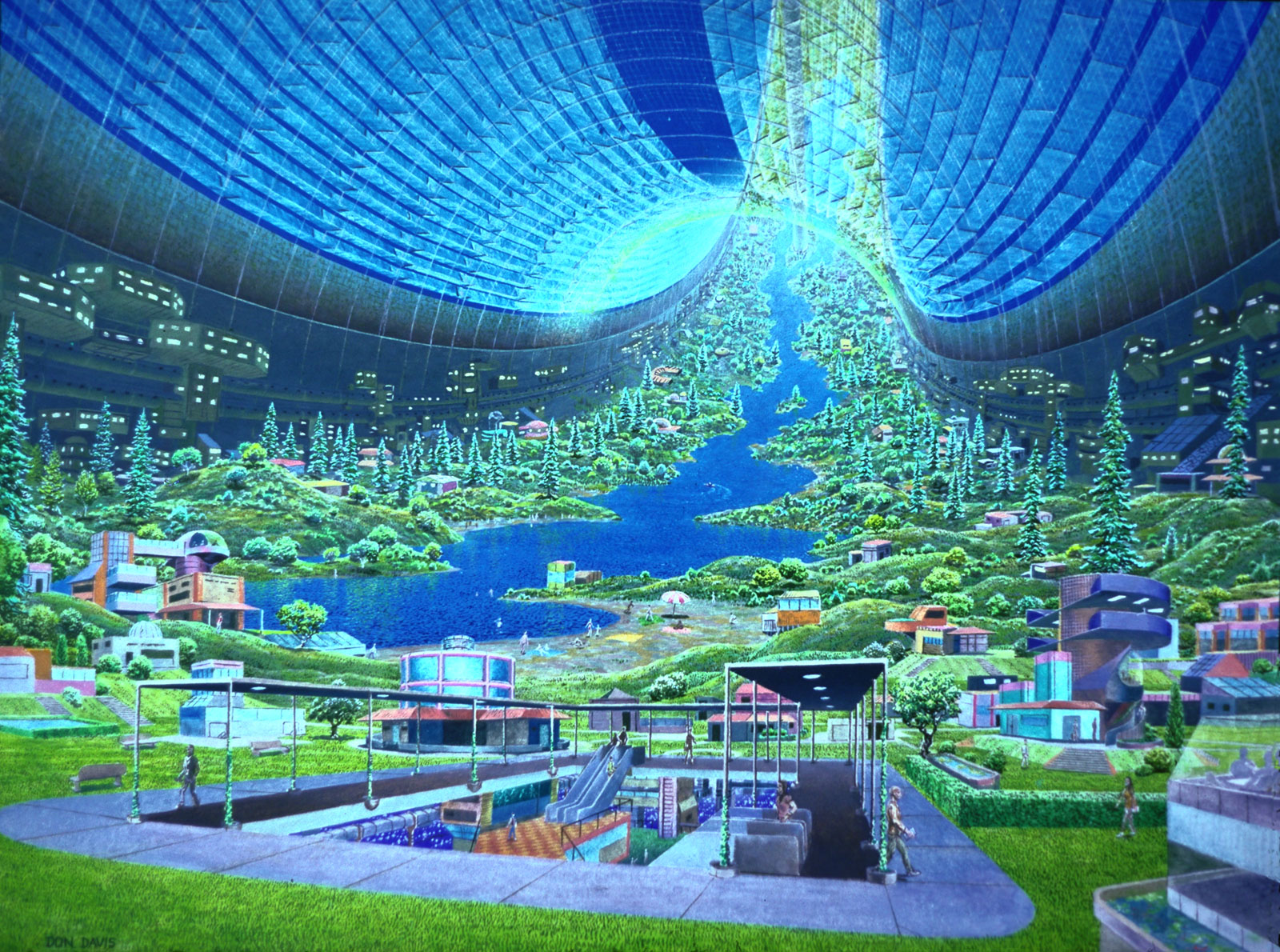
As I said, the poetry must be related to art.  The SFPA has chosen five works of art, and linked to them under the topic on the forum.  (I've also posted them below, and show one of them Medea, here.)  The poem(s) submitted must be inspired, however loosely, by one of these five works of art.  Some are classics, like Vermeer's The Astronomer, and The Hunt of the Unicorn tapestry.  But there is also modern space art from Don Davis.  The SFPA is a speculative poetry society, so poetry themes must follow science-fiction, horror, fantasy, straight science, or have some speculative aspect.

I would greatly appreciate it if you would spread the word.  Our deadline is June 30, 2010, so there is plenty of time to view the art, write a poem or two, and get them in!

Pax

Image Credit: De Morgan Medea, Public Domain Image from Wikimedia Commons


Forum rules
Contest Guidelines – SFPA New Poets Contest: The Art of Poetry

The Science Fiction Poetry Association (SFPA) is holding a poetry contest with art as its inspiration! The contest is offering cash prizes and there are no fees to enter. New poets are invited to contribute. Non-members as well as members are eligible. Please read the complete rules below for theme, submission specifics, etc. Then write 'em up and send 'em in! 

PRIZES: 
First prize: $10, a one year SFPA membership, and publication on SFPA's web site
Second prize: $8, a copy of Cinema Spec: Tales of Hollywood and Fantasy, and publication on SFPA's web site
Third prize: $7, a copy of Dwarf Stars 2009, and publication on SFPA's web site 

We plan to archive the winning poems indefinitely, but authors may request removal from the web site after six months. SFPA reserves the right to grant all, some, or none of the prizes, at its discretion.

WHO MAY ENTER: 
The contest is open to new poets, SFPA members and nonmembers alike, with the following exclusions. Poets must have three or fewer paid poetry publication credits. No members of the contest committee, no current SFPA officers or web site staff, and no family members of the judges may enter the contest. 

CONTEST THEME: 
Write a speculative poem of 20 lines or less inspired by one of these works of art:
http://www.donaldedavis.com/BIGPUB/STANTRUS.jpg
http://commons.wikimedia.org/wiki/File: ... onomer.JPG
http://commons.wikimedia.org/wiki/File: ... _Medea.jpg
http://en.wikipedia.org/wiki/File:The_H ... stry_7.jpg
http://commons.wikimedia.org/wiki/File: ... nset_2.jpg

All forms welcome--haiku, cinquains, tanka, sonnets, free verse, etc., but poems must contain one or more of the following elements: science fiction, fantasy, horror, surrealism or straight science. Post previously unpublished poems only. No reprints. Poems should be appropriate for a general audience. We reserve the right to remove from contest consideration and from the forums any poems that might be considered above a "PG" rating.

SUBMISSION SPECIFICS: 
Submissions must be made at the SFPA Forum (
index.php). Registration at the forum will be required to post poems. Poets shall submit poems as posts under the heading SFPA New Poets Contest: The Art of Poetry. This topic will be password-protected. The password will be listed on the forum, right under the contest topic heading. One must register to even SEE the contest topic. One poem per post, with a maximum of three poems per person. Include your name, title of poem, and then text of poem. Winners will be contacted for their addresses via email after the contest closes.

DEADLINE: 
The deadline for submissions is 11:59 EDT on June 30, 2010. SFPA reserves the right to extend the contest deadline, if necessary. Winners will be announced on the SFPA Forum. Questions? The first topic under the contest heading is the place to post questions. If you cannot access this topic after registering, post your question in the “Website and Forum” area. The SFPA shall not be held liable if submissions cannot be made due to website problems or connection difficulties, etc.